

Books
I wrote or contributed to several books, in English and Hungarian:
- The Nanosatellite Revolution: 30 Years and Continuing (ISBN: 9781510649330, 2023) - contributing coauthor (1 chapter)
- Modified Theories of Gravity and Cosmological Applications (ISBN: 978-3-0365-5829-5, 2023) - contributing author (1 chapter)
- Linux: A Network Solution For Your Office (ISBN: 978-0-672-31628-9, 1999; translated into Chinese, French)
- Programming Windows 98/NT Unleashed (ISBN: 978-0-672-31353-0, 1998; translated into Chinese, Italian, Korean, Polish, Spanish)
- Visual C++ 5 Unleashed (ISBN: 978-0-672-31013-3, 1997; translated into German, Korean, Russian)
- Visual C++ 4 Unleashed (ISBN: 978-0-672-30874-1, 1996)
- Windows NT Workstation 4 Unleashed (ISBN: 978-0-672-30972-4, 1996) - contributing author (1 chapter)
- Programming Windows 95 Unleashed (ISBN: 978-0-672-30602-0, 1995) - contributing author (3 chapters)
- A Commodore 16-os belső felépítése - Commodore 16 Internals (ISBN: 963-02-4457-8, 1986; in Hungarian)
- A bűvös kocka - Rubik's Cube (ISBN: 963-411-907-7, 1981; in Hungarian)
Some further details on select titles are provided below.
 I've been using Linux since 1993, starting with version 0.99pl12 (that is, patch level 12 of one of the last beta versions preceding the first 'official' release.) In 1998, I had a chance to discuss a book project with the editors of Macmillan Publishing. Early the next year, I began writing Linux: A Network Solution for Your Office.
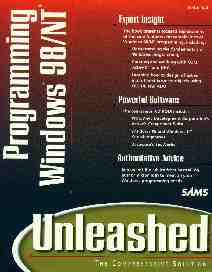 This book, originally published in January 1996 under the title Visual C++ 4 Unleashed, provides an in-depth introduction into most Windows C++ programming topics.
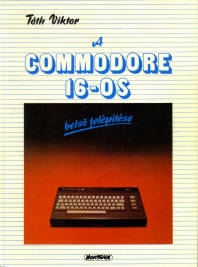 I wrote this book shortly before leaving Hungary in the summer of 1986. At the time, the classic home computer, the Commodore 64, enjoyed tremendous popularity in Hungary; there was hope that the newer, cheaper models like the Commodore 16 would also become popular.
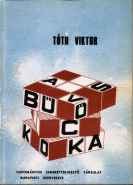 To the best of my knowledge, this small booklet, published by an obscure publishing house, was the first Hungarian-language publication about that phenomenon that swept the world in the late 1970s: Rubik's Cube.
